


Renaissance And Baroque
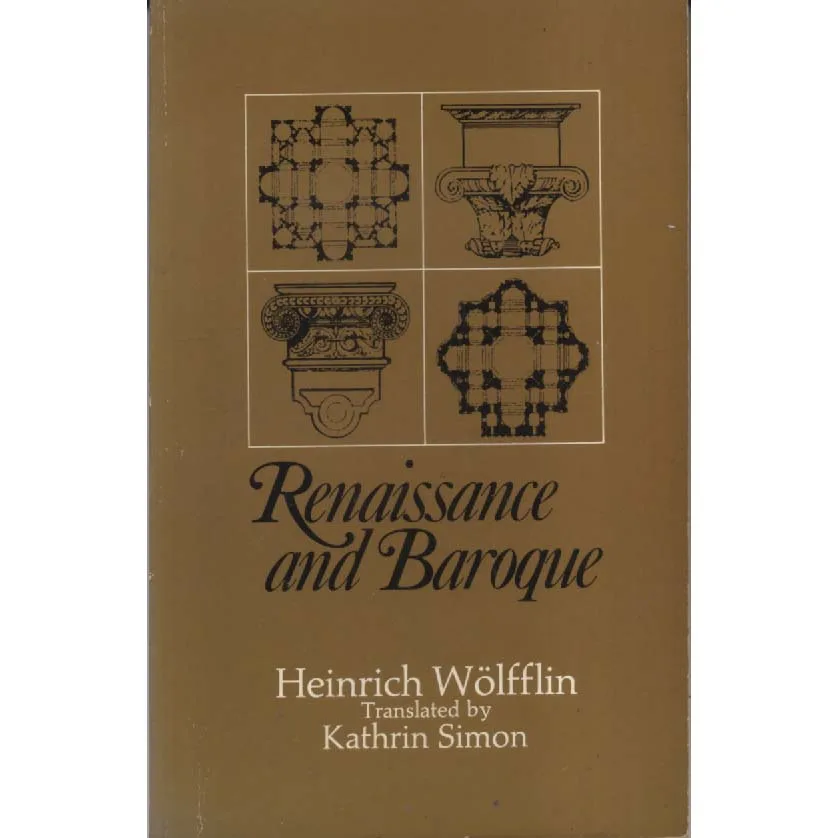
Publisher: Collins
Format: Paperback
ISBN: 9780002173490
There are art history books, and then there are books written with such grand intellectual confidence that they appear to be attempting to reorganise Western civilisation itself. Renaissance and Baroque by Heinrich Wölfflin, published here in a 1984 Collins edition, belongs gloriously to the second category: a slim but formidable classic in which architecture, painting and aesthetics are examined with the seriousness of military strategy and the occasional intensity of a theological dispute.
Wölfflin — one of the great Swiss art historians, and a man whose name alone sounds like it should echo through candlelit university corridors — essentially helped invent modern formal art history. Before him, people often discussed art in terms of biography or historical anecdote. Wölfflin arrived and calmly announced that entire artistic eras possessed distinct visual languages which could be analysed systematically. One imagines Victorian academics blinking slowly while clutching their monocles.
And honestly, he had a point.
This book explores the transition between the ordered balance of the Renaissance and the dramatic theatricality of the Baroque — which sounds terribly abstract until you realise he is basically explaining why one set of buildings looks calmly mathematical while the other appears to be having an emotional crisis involving cherubs. Renaissance art says, “Civilisation is rational.” Baroque art replies, “Yes, but what if we added spiralling marble and overwhelming spiritual ecstasy?”
The joy of Wölfflin is that he writes with complete certainty about visual culture in a way modern academia often seems too frightened to attempt. There are no apologetic buzzwords here. No “problematising spatial discourse within contested narratives”. Instead, Wölfflin strides confidently through centuries of European art pointing at things and explaining why they matter. It is oddly exhilarating.
Published by Collins in 1984, this edition belongs to that wonderful era when serious intellectual books still appeared in affordable paperback form for the optimistic reader who believed they might casually absorb the foundations of art historical thought during a train journey to Croydon. There was once an entire publishing ecosystem built around the assumption that ordinary people might voluntarily read about Baroque spatial dynamics for pleasure. A magnificent civilisation, now largely lost.
Physically, this copy is in good condition, which is impressive considering books on art history often lead unexpectedly hard lives. They are carried to lectures, annotated furiously by students at 2am, stacked beside reproductions of Caravaggio, and abandoned in university flats occupied by people surviving on coffee and vague existential despair. Surviving copies tend to acquire the slightly worn dignity of retired lecturers.
There is also something deeply comforting about old academic paperbacks from this period. They possess a seriousness entirely free from marketing hysteria. Nobody is promising to “unlock your creativity” in seven easy steps. Wölfflin simply expects you to sit down, pay attention and learn why the Renaissance and Baroque are visually different. Astonishingly, this turns out to be far more satisfying than most modern self-improvement literature.
A superb volume for art lovers, architecture enthusiasts, collectors of classic humanities texts, students of European culture, or anyone who enjoys books written before publishers became terrified of intellectual confidence. Even readers with only a passing interest in art history may find themselves unexpectedly drawn into Wölfflin’s grand vision of civilisation expressed through line, form and space.
Crappy Old Books: preserving the paper foundations of civilisation one slightly foxed paperback at a time.
Keep browsing: See more History books Other books by Heinrich Wolfflin
